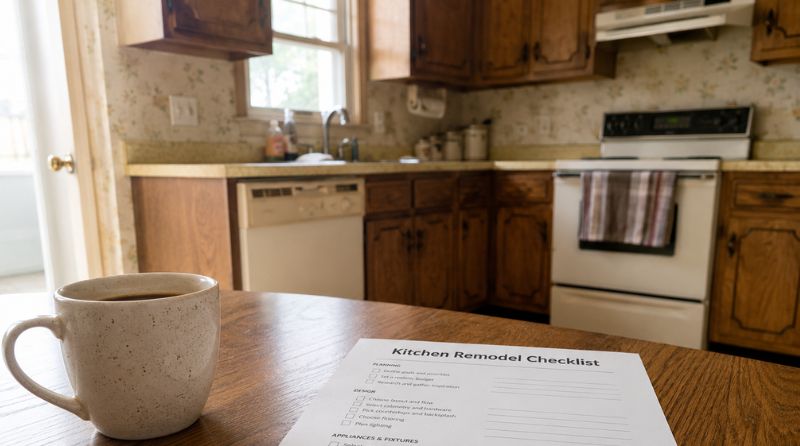
A kitchen remodel is easier to manage when you stop thinking of it as one big project and start thinking of it as a series of decisions made in the right order.
That is what a kitchen remodel checklist does.
Instead of rushing straight to cabinet colors or countertops, the smartest projects begin with how the kitchen works, what the budget needs to do, and what choices must be made early to avoid delays later.
The 12 Point Kitchen Remodel Checklist
Use the checklist below to plan your kitchen remodel from first idea to final walkthrough.
1: Define What is Not Working
Before you choose finishes, get clear on the real problems.
Ask yourself:
- Is the kitchen short on storage?
- Does the layout make cooking frustrating?
- Is there not enough prep space?
- Do cabinet doors and drawers waste usable space?
- Is the room simply dated, or does it actually function poorly?
This first step matters because the best remodels solve problems instead of just changing surfaces.
If you want expert help with this stage, let’s start with an in-home conversation about what you like and do not like about your existing kitchen.
2: Gather Measurements, Photos, and Inspiration
Before you meet with a designer or contractor, collect:
- photos of your current kitchen
- rough room measurements
- appliance sizes if you plan to keep any
- inspiration images
- a must-have list
- a nice-to-have list
This does not need to be perfect. The point is to organize your thinking.
3: Decide on the Project Scope
Now define what type of remodel you are planning.
Option A: Refresh what is already there
You may be keeping the layout and focusing on:
- cabinet updates
- counters
- backsplash
- lighting
- paint
- fixtures
Option B: Improve function without a full gut
You may be adding:
- better cabinet storage
- improved layout within the same footprint
- new semi-custom or custom cabinets
- upgraded appliance placement
Option C: Fully redesign the kitchen
This may include:
- layout changes
- new cabinetry throughout
- moving plumbing or electrical
- structural work
- removing walls
- island or peninsula reconfiguration
The more the layout changes, the more planning and coordination the project usually requires.
4: Build Your Budget
A realistic budget should cover more than finishes.
Make space for:
- cabinets
- countertops
- hardware
- backsplash
- flooring
- plumbing fixtures
- lighting
- labor
- possible repairs behind walls
- delivery lead times
- contingency funds
Atlanta-area kitchen renovation benchmarks often start around $24,000 for budget renovations, $36,500 for mid-grade renovations, and $74,000 for high-end renovations for full renovations without layout changes. Marietta projects vary, but these are useful planning references.
5: Plan the Layout Before Choosing Finishes
This is where many homeowners get the sequence wrong.
Choose the layout first:
- sink location
- range location
- refrigerator location
- prep zone
- pantry needs
- seating
- island vs peninsula
- traffic flow
National kitchen-planning advice consistently shows that poor circulation, weak workflow, oversized islands, and inadequate appliance clearances create long-term regrets.
My design approach uses your goals plus National Kitchen and Bath Association design standards to create a practical, efficient layout.
6: Choose Your Cabinet Strategy
Cabinets affect both budget and daily function, so this step deserves special attention.
Your checklist here should include:
- custom vs semi-custom vs cabinet-door refresh
- face-frame vs frameless construction
- drawer-box quality
- soft-close hinges and slides
- door style
- finish choice
- pantry storage
- corner cabinet solutions
I offer a variety of kitchen cabinet options depending on your goals and budget:
- Omega for custom cabinet solutions
- Diamond and other MasterBrand options for semi-custom value
- replacement cabinet doors, drawer fronts, drawer boxes, and soft-close hardware for more affordable upgrades.
If your cabinet boxes are still solid, do not skip the possibility of a cabinet-door upgrade instead of full replacement.
7: Finalize Appliances Earlier Than You Think
Do not wait too long on appliance selection.
Your checklist should include:
- refrigerator width/depth
- range or cooktop size
- wall oven or microwave plans
- dishwasher placement
- ventilation needs
Appliance choices often affect cabinet dimensions and layout. If these decisions happen too late, they can delay the project or create expensive rework.
8: Select Finishes and Fixtures
Once layout and cabinet direction are clear, move into finish selections:
- cabinet color and style
- countertop material
- backsplash tile
- flooring
- faucet and sink
- hardware
- pendants and task lighting
- paint color
This is the fun stage, but it works best when function and scope are already settled.
9: Prepare for Ordering and Lead Times
Before construction begins, make sure you know:
- what is already ordered
- what is still pending
- which items have the longest lead times
- what cannot begin until another item arrives
Material delays and late product decisions are common reasons projects slip.
10: Prepare Your Home for Construction
Before demo day, check off:
- set up a temporary kitchen
- clear cabinets and counters
- protect nearby rooms
- plan for dust and noise
- discuss access hours
- confirm who handles daily cleanup
- remove fragile items from adjacent spaces
A remodel is easier to live through when expectations are clear before work begins.
11: Stay Disciplined During Construction
During the project:
- keep communication centralized
- track any changes in writing
- avoid impulsive scope changes
- review progress at agreed checkpoints
- hold final styling decisions until the essentials are confirmed
This is where a clear design and planning process pays off.
12: Use a Final Walkthrough Checklist
Before calling the project complete, review:
- cabinet alignment
- drawer glide and hinge function
- paint touchups
- backsplash finish quality
- countertop seams if applicable
- appliance operation
- hardware installation
- trim details
- cleanup
- incomplete punch-list items
Do not rely on memory. Walk the room slowly and write everything down.
A Better Kitchen Renovation Starts with a Thorough Kitchen Remodel Checklist
The strongest kitchen remodels do not start with tile. They start with clarity.
That is why a thorough design process is valuable for homeowners who want more guidance up front. I work with you directly in the home, takes measurements, discusses goals, and develops plans, illustrations, and estimates for approval so the project is thought through before bigger purchasing decisions are made.
If you are ready to start planning, take a moment to explore my kitchen design service, review kitchen cabinet options, or consider cabinet door replacement if you want a more affordable option for your project.
FAQs
What should I do first in a kitchen remodel?
Start by identifying what is not working in the current kitchen. Layout, storage, and workflow issues should be clear before you choose finishes.
When should I choose cabinets?
Early. Cabinet selection affects budget, layout, storage planning, and appliance coordination.
Should I buy appliances before cabinets?
In most cases, yes — or at least finalize the appliance specifications early enough that cabinetry can be planned correctly around them.
Do I need a full remodel if my kitchen just looks dated?
Not always. If the layout works and the cabinet boxes are still in good shape, a cabinet-door or selective upgrade may be enough.
What is the biggest mistake homeowners make?
One of the biggest mistakes is choosing finishes before fully planning layout, budget, and cabinet strategy.


